Invest With Us · Access
Affordability is an outcome — not an input.
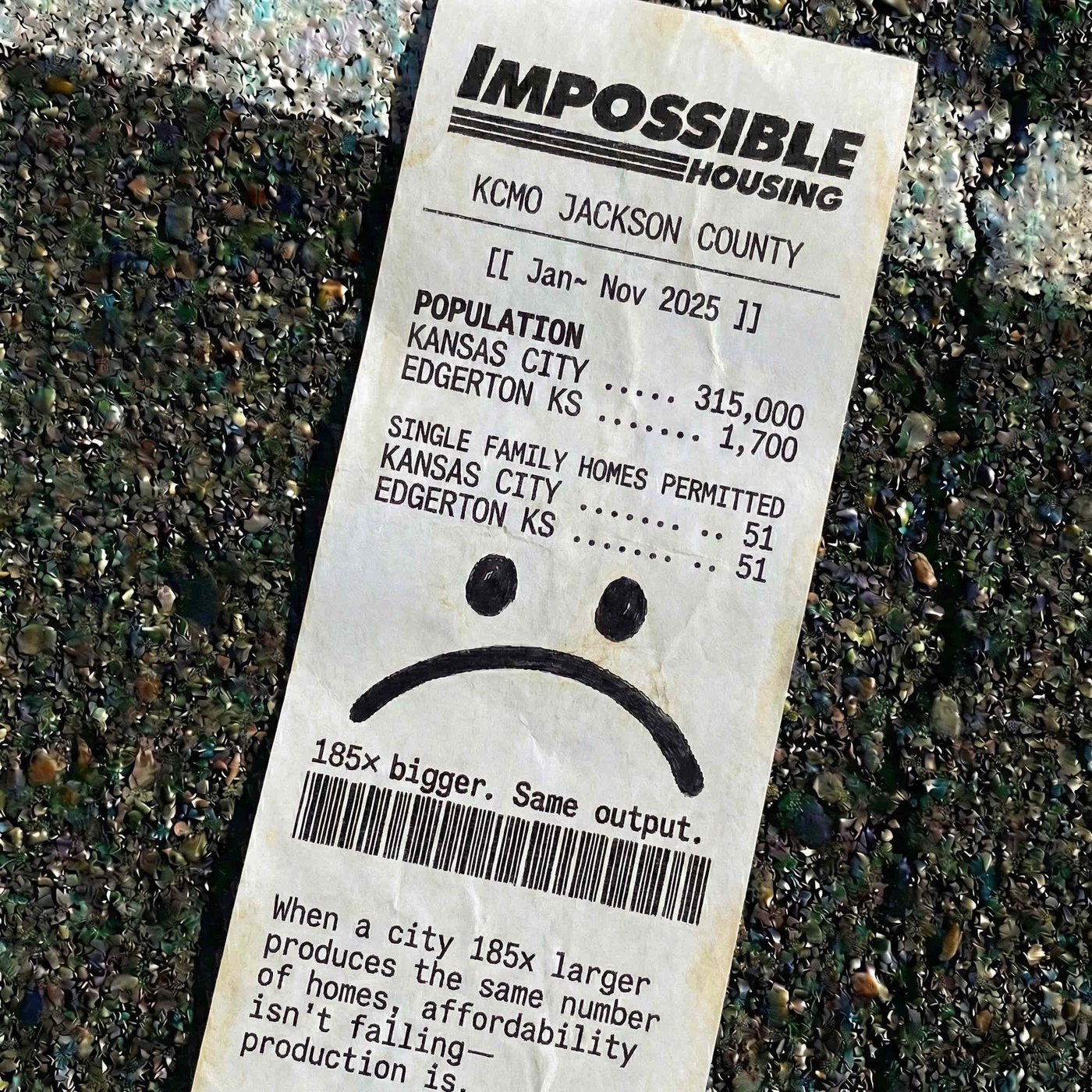
Affordable housing isn't a pricing problem. It is a production problem: new single-family production in Kansas City's urban core has fallen roughly 68% — 191 homes at its post-2019 peak, 60 in all of 2024 — while the gap on a one-off build runs $162,000 over budget. Charity closes that gap once. It cannot close it fifteen thousand times.
The answer is not a bigger subsidy. It is a different business model — and that is what investing here buys into: the move from project, to production, to industry.
↓68%
New single-family homes, KCMO urban core
60
Homes produced in all of 2024
$162,000
The gap on a one-off build
01
Project model
$500K+
Fragmentation — one-off builds, full cost every time, affordability requires subsidy.
02
Production model
$400K+
Standardization — standard plans, repeatable crews, more homes per dollar.
03
Industry model
$300K+
Scale — continuous production, economies of scale, naturally attainable homes.
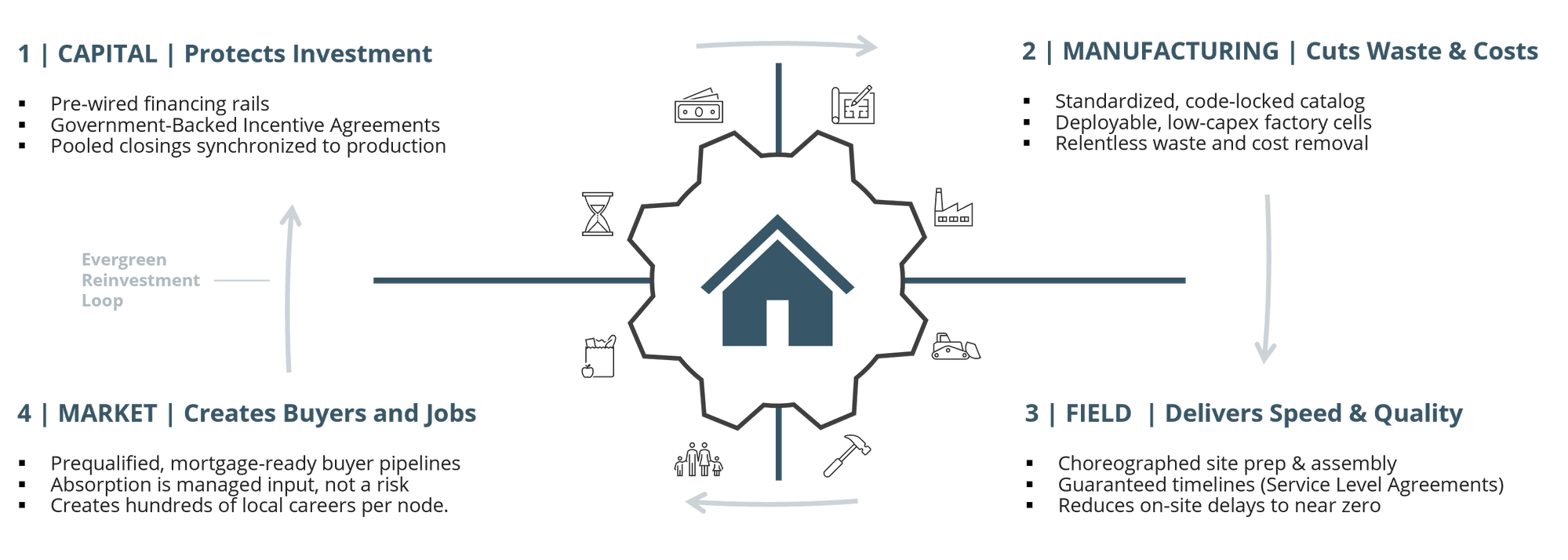
Home cost drops when the business model changes. The same machine that makes homes attainable is the machine an investment activates.
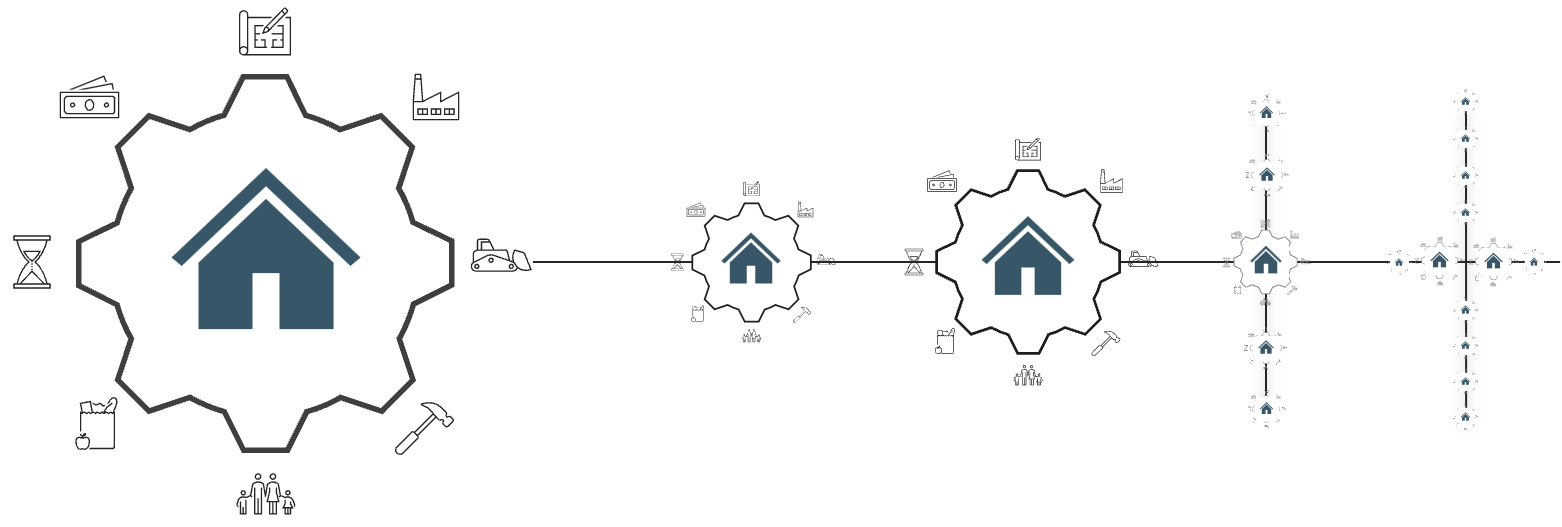
What one node contains — and how it replicates
Ways to invest with us
01
The capital platform
Request access
OneMillion.Homes — the money layer of the parallel housing economy. Fund access begins with a conversation and continues in the data room.
02
The South Vine development
Request access
The first order book: the full development on Kansas City's historic East Side — homes, infrastructure, and the performing-arts identity program around them.
03
Kansas City programs
Request access
Backyarders and Lot Builders — project-level participation in the live KC.Together.Homes programs putting second homes on owned land and vacant lots back into production.
04
The supply chain
Request access
Eastside Lumber and Bilt-Blocks — the mill and the factory: the production capacity every node runs on.
05
Creative & placemaking projects
Request access
Deal structuring and financing for creative projects — venues, studios, the Kansas City Music Office — the identity layer that makes people want to come home.
06
Environmental remediation
Request access
Brownfield and remediation partnerships — the ground-level work that unlocks tracts nothing else can touch, done with federal-commitment experience behind it.
How capital comes in
The machine is built to receive capital in every form the work qualifies for — not just one door.
01
Traditional investment
Equity and debt in the projects and operating companies — the machine's layers, capitalized directly.
02
Impact investing
Mission-aligned capital with measurable outcomes: the tract's transition — comps re-authored, ownership seated, jobs created — is the impact report.
03
Program-related investments (PRI)
Foundation capital deployed as PRI — below-market, charitable-purpose capital that distressed-tract housing fits exactly.
04
Grants through our 501(c)(3)
Philanthropic grants routed through the nonprofit arm — funding the work markets can't yet price: remediation, pre-development, placemaking.
05
Opportunity Zone investment
South Vine sits in a Qualified Opportunity Zone — OZ equity receives the treatment OZ investors already know, deployed by an operator who worked the OZ era from inside.
How access works
Pick a lane above, or book time with Dan ↗. The path is a conversation first, then the data room — where the numbers, structures, and documents live.
Nothing on this page is an offer of securities. Opportunities are shared through definitive documents, after a conversation.
The machine your investment activates is at Scale-Built Housing; the mission it serves is the end of distress, in its tracts.