Kansas City · Sixth Generation · Architectural Engineer
The blueprint for this work was drawn in 1988.
I was born in 1986.
I have spent forty years building the life stack to complete it.
The life stack — not the capital stack.
- Years on the boards
- LCRA · Chapter 353 · EEZ, 2013–2020
- Redevelopment projects voted
- Verified from 228 board documents
- Public capital approved
- The chasm splits below
The chasm I watched form · 2013–2020
The chasm — $852.4M
Chasm 1 compared to Chasm 2
The chasm that built the chasm · 1932–1964
The chasm — >99% exclusion
I watched the first chasm form in real time, in the room, vote by vote. The second was already there — codified between 1932 and 1964, when Kansas City built approximately seventy-seven thousand homes through suburban sprawl and less than one percent reached Black families in the redlined communities of the urban core.
These are not two chasms. They are the same chasm, ninety years apart — still running, codified into every mortgage-pricing decision, every algorithmic underwriting score, and every redevelopment allocation made in the United States.
Regardless of where you stand in the production system today — capital, manufacturing, labor, ownership, stewardship — this chasm appears. Not because the people on the other side need housing less. Because nothing coordinates the system to keep the chasm from forming again.
That is what we are here to build. A coordination platform that lets the production system reach the tracts the original sprawl was built to skip.
We are now closing it.
The Lens
An engineer spends ninety percent of the time on the formula.
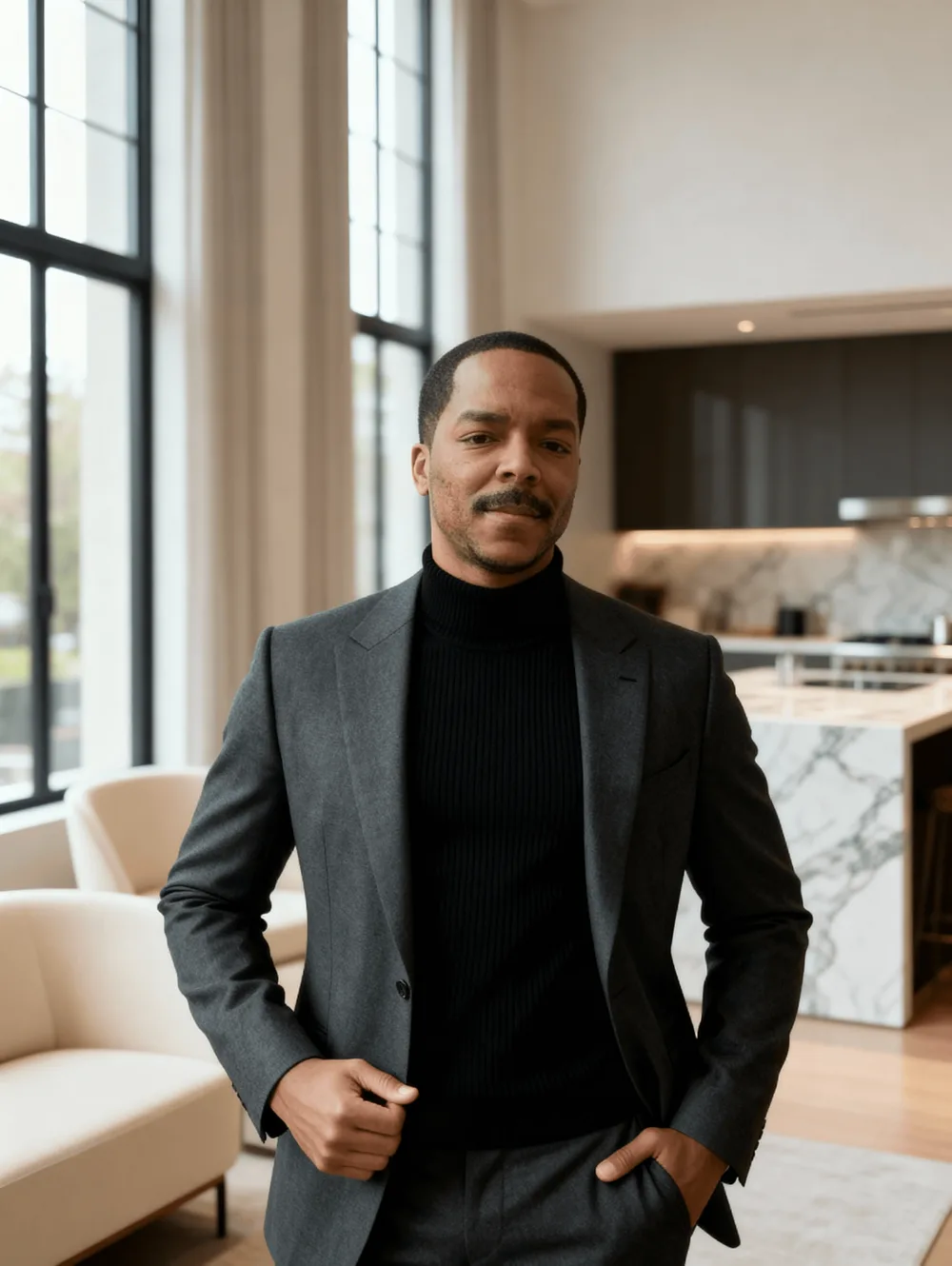
I am an architectural engineer, Missouri University of Science and Technology.
The discipline teaches you to spend ninety percent of your time on the formula and ten percent on the implementation. The formula is the coordination platform — the thing that lets the loads, the materials, the people, and the time move through a system without collapse. Implementation is what happens once the formula is sound.
Most people building in distressed neighborhoods are working on the ten percent. They build a house. They open a business. They run a program. The work is real, but the formula underneath is broken — capital is disconnected from production, production from labor, labor from ownership, ownership from stewardship — so the implementation cannot compound.
I have spent fourteen years on the ninety percent.
A census tract is a building at a different scale. It has load paths — capital flow. Envelopes — zoning, redlining, school districting. Mechanicals — utilities, transit, retail, employment. When the system is healthy, every element carries weight to the next. When it has failed for ninety years, every element has been load-shed somewhere else.
The chasm between $903.7M and $51.3M is not a buildings problem. It is a load-path problem at the census-tract scale. And the load path is not random — it traces the 1938 federal redlining boundaries, still enforced by the algorithms that price every mortgage written in the United States.
The Pattern
Over fifteen thousand census tracts look and experience exactly like this one.
They look the same from the air, and they experience the same things on the ground. The same disinvestment curve. The same loss of retail. The same erosion of household balance sheets. The same 1938 redlining map redrawn in real time by the algorithms that price the next mortgage.
They look and experience just like humans — built on the same anatomy, suffering the same wounds, capable of the same recovery.
Most developers develop where they are most comfortable — where they grew up, where they live, where the formula they inherited already works. That is why the chasm has held for ninety years. The work is not impossible. The operator pool was not built for it.
“If you can crack this code here in Kansas City, you’ve cracked it in countless cities across the country. And I’ll take you to all those cities.”
Since that day, we have been cracking the code.
The Formula
We are not reinventing any piece of this.
An architectural engineer's job is to streamline and to mitigate waste. The tools are off-the-shelf. They already exist — capital, manufacturing, labor, mortgages, policy, stewardship. The work is to coordinate them so the load travels from one end of the system to the other without breaking down.
Today's technology makes that coordination possible at a scale that could not be done before. The same off-the-shelf pieces, better coordinated, applied across fifteen thousand tracts.
One formula. Built once. Carried.
The Stack
Forty years on the ninety percent.

The conditions the work required were not present in 2013. They were assembled, year by year, from inside the room. The two setbacks in 2017 and 2020 taught us what the formula had to survive. Everything after them is the formula made operational.
A partial roll of the 147 projects voted on
Appointed to the LCRA Board
First seat on the Kansas City redevelopment boards.
Married Ebony at the Workhouse Castle
Closing the two-castle circuit — school in one, married in the other.
Found the 1988 blueprints in the Black Archives
The plan was waiting. I had not invented this work; I had resumed it.
Moved the Key Coalition URP
Foundational East Side Urban Renewal Area — the first East Side action of my tenure.
Kemper Foundation Jazz LP Listening Tour
Six countries, nine cities, every major jazz festival — to see how the world cares about Kansas City.
Given and lost the Public Works properties
Returned from the tour to ground we did not yet have the structure to hold.
Seconded the LCRA workforce-housing letter
The motion became the City policy chain — MVA, Housing Trust Fund, inclusionary set-aside, Revive the East Side.
Bought our first property
First community design charrettes
First attempt to recruit families through conceptual design. Buy-in could not overcome the depth of disinvestment.
LCRA tenure ends · second family-recruitment cohort
Seven years on the boards. $1.07B in approved incentives. The diagnosis was complete. A second cohort of families ran into pandemic conditions and the Kansas City Star coverage.
Bought Eastside Lumber
110-year-old industrial supplier, restored to East Side ownership, named for my grandfather.
Pivoted to the coordination platform
The Formula stack assembled: capital, production, policy, stewardship. The work the previous decade taught us could not be done one business at a time.
Launched In Good Company
The neighbor-recruitment platform for the communities we are now building. The lesson of 2017 and 2020 made operational.
We are now closing it.
Contact
If the work is the kind of work you fund, let's talk.
Daniel Edwards · Kansas City, Missouri